Earth’s Diversity Expedition Sets Off
Organized by the Taiwan Institute for Sustainable Energy (TAISE) and co-organized by the University of Taipei, the final judging of the 2026 Climate Change Painting Competition for Elementary and Junior High School Students was successfully completed on June 30 at the Tianmu Campus of the University of Taipei. This year’s competition attracted a total of 6,212 student participants from 13 countries. Following the preliminary judging, more than 1,700 shortlisted works advanced to the final round, where 10 experts and scholars in art education, biodiversity and related fields selected this year’s outstanding entries.
Sixteen Editions, 48 Countries and Nearly 80,000 Young Participants
Since 2009, TAISE has organized the Climate Change Painting Competition for Elementary and Junior High School Students, which has now entered its 16th edition. Over the years, the competition has engaged 77,730 students from 48 countries worldwide. By using artistic creation as a medium for environmental education, the competition helps the next generation understand climate change, sustainable development and nature conservation through teacher guidance and student creativity, while cultivating climate awareness and a spirit of action among young people.
Dr. Eugene Chien, Ambassador-at-Large of the Republic of China (Taiwan) and Convener of the competition, emphasized that sustainability education is taking root among younger generations. Through this year’s theme of biodiversity, children are learning to understand the interdependence of life and to imagine how humanity can coexist with nature.
This year’s competition centered on the theme of “Biodiversity” and adopted “Earth’s Diversity Expedition” as its event title, responding to the growing global concern for natural ecosystems and the diversity of life amid climate change and rapid environmental transformation. Biodiversity encompasses the diversity of species, genes and ecosystems. It is essential to maintaining ecological balance, supporting human life and sustaining future development. The theme also echoes the Kunming-Montreal Global Biodiversity Framework, which sets the 2030 action target of halting and reversing biodiversity loss, as well as the 2050 global vision of living in harmony with nature.
Evaluating Artistic Expression While Paying Closer Attention to Children’s Understanding of Environmental Issues
During the judging process, participating students started from the natural environments around them and used their brushes to depict the relationships among forests, oceans, wetlands, animal and plant habitats, and human activities. Their works demonstrated careful observation and imagination regarding the interdependence of all forms of life.
This year’s judging criteria placed 50% of the score on “theme and content,” focusing on whether the work demonstrated an understanding of the core concepts of biodiversity and could present interactions among living beings, environmental change and the impact of human behavior on nature. “Creativity and originality” accounted for 40%, emphasizing students’ ability to express their own perspectives through imagination. “Artistic quality” accounted for 10%, assessing brushwork, lines, color and overall aesthetic presentation.
The final judging panel brought together professionals from art education, marine studies, ecology, biodiversity and related fields, including university professors, museum directors, illustrators and representatives of research institutions. Through these diverse professional perspectives, the judges evaluated not only the artistic quality of the works, but also how children understood environmental issues and transformed their care for nature into creative visual expression.
Members of the judging panel offered observations from their respective areas of expertise. Chen Shiau-Peng noted that the children demonstrated keen observation and sincere emotion, presenting rich imagination about natural ecosystems, biodiversity and the coexistence of humanity and nature. Wang Ming-Yuan remarked that each artwork was a heartfelt expression of children’s care for marine and nature conservation, as well as a seed of hope for protecting the blue planet. From a biodiversity perspective, Wang Chun-Neng observed that the works revealed young people’s love for natural life while also reflecting concerns about climate change, species loss and a sustainable future.
Lin Wei-Min pointed out that students began with their own cities, depicting ecological diversity and reflections on environmental destruction. Sun Yi-Hua praised the children for using bold colors and delicate observation to transform complex climate action into artistic language full of vitality.
Understanding the Interdependence of Different Species and Reflecting on How Humanity Can Coexist with Nature
Wu Long-Rong stated that artistic creation enables children to think about how humans can coexist with nature, while also allowing the theme of biodiversity to reveal forward-looking observation and expression. Wang Chuen-Tz observed that many children used painting to learn about Formosan leopard cats, Formosan black bears, insects and marine life, bringing them closer to sustainability and environmental issues through the creative process.
Lin Chia-Wei noted that although biodiversity is not an easy concept to understand, the children took the initiative to research, reflect and create, allowing the seeds of conservation to sprout in their hearts. Benny K. K. Chan stated that the competition brings biodiversity into children’s everyday understanding and is an indispensable step in advancing biodiversity education in Taiwan. Huang Wen-San emphasized that science provides evidence for understanding the world, while art gives people the emotional power to change it. Wu Yihsin also said that judging the works was not merely about scoring; it was more like borrowing children’s eyes to see anew the environmental challenges we face. Gami observed that children used genuine emotions to give the vast issue of climate change a lyrical and profound point of entry. Chang Hui-Chun further reminded that true biodiversity is not simply about depicting many species, but about seeing the delicate connections among life, habitats and human choices.
TAISE stated that climate change and biodiversity are among the two most central issues in contemporary sustainable development. Biodiversity is not only about protecting wildlife; it is also closely connected to food security, water resources, public health and economic development. When ecosystems fall out of balance, human society ultimately bears the consequences. For this reason, this year’s competition seeks to guide students to begin with their everyday lives, understand the interdependence among different forms of life and further reflect on how humanity can coexist and thrive with nature.
TAISE expressed special gratitude to the University of Taipei for providing excellent venue and administrative support. The foundation also extended sincere thanks to all judges for their professional and impartial commitment to the judging process, contributing to the discovery of outstanding works and the advancement of sustainability education. The final results will be officially announced in the near future. The public is encouraged to continue following the event website and witness the remarkable achievements of children using their brushes to portray climate action and biodiversity.
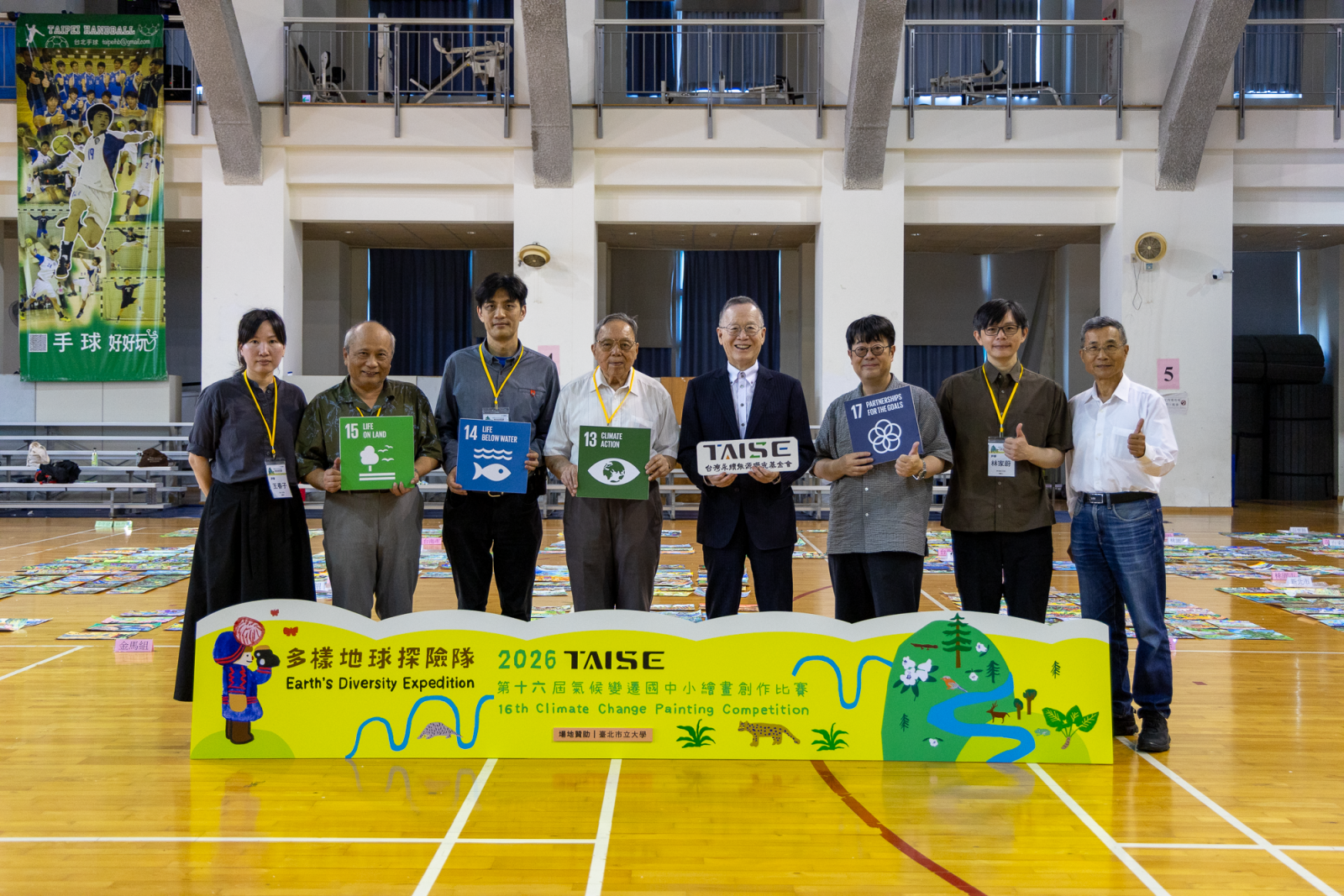
Convener Dr. Eugene Chien, Chairman of TAISE (fourth from right); Dr. Ying-Hao Chiu, President of the University of Taipei (third from right); Dr. Yung-Jen Chen, Chief Operating Officer of TAISE (first from right); and judges for the middle- and lower-grade divisions pose for a group photo. Photo courtesy of the organizer.
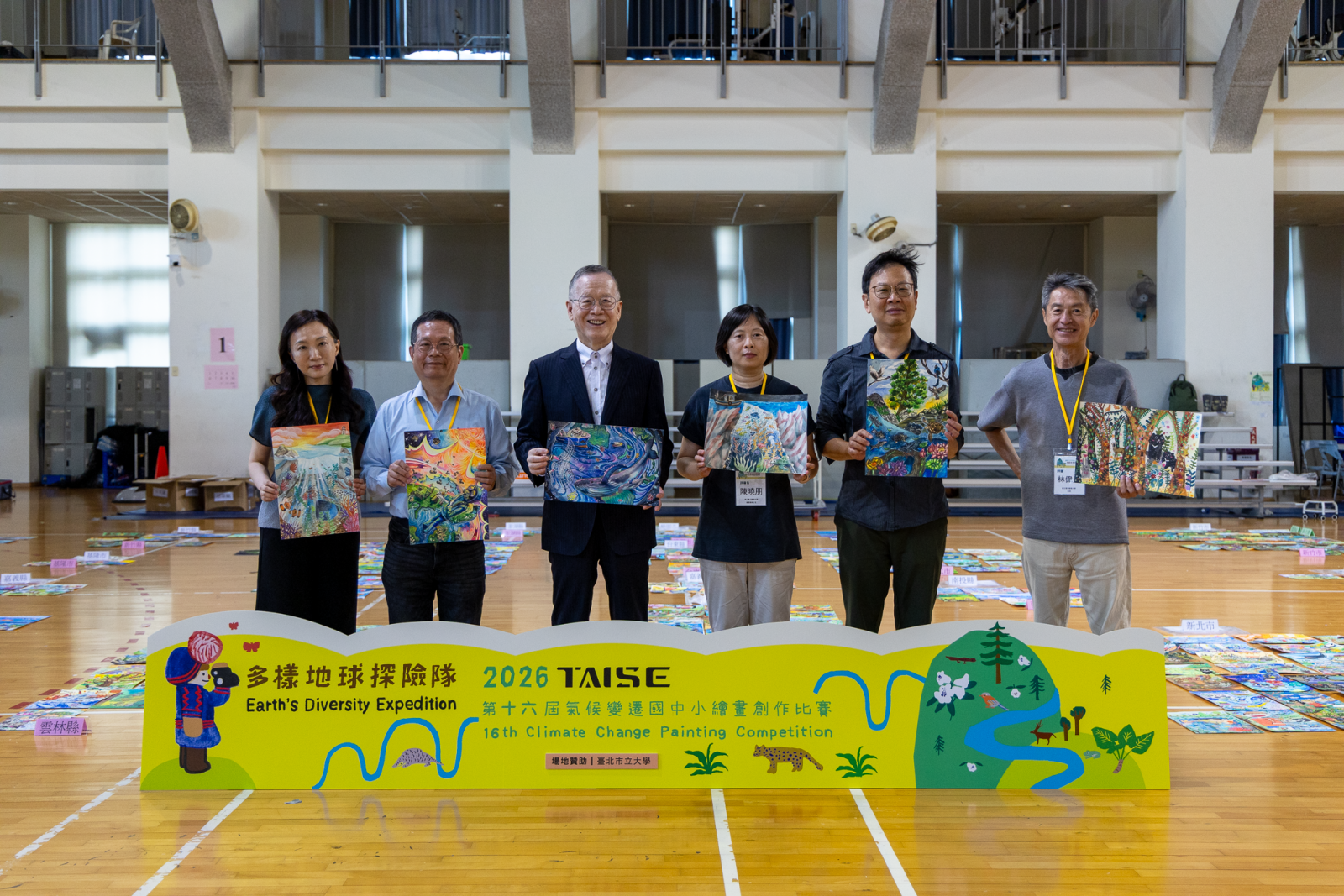
Convener Dr. Eugene Chien poses with judges for the upper elementary and junior high school divisions, holding selected winning artworks. Photo courtesy of the organizer.
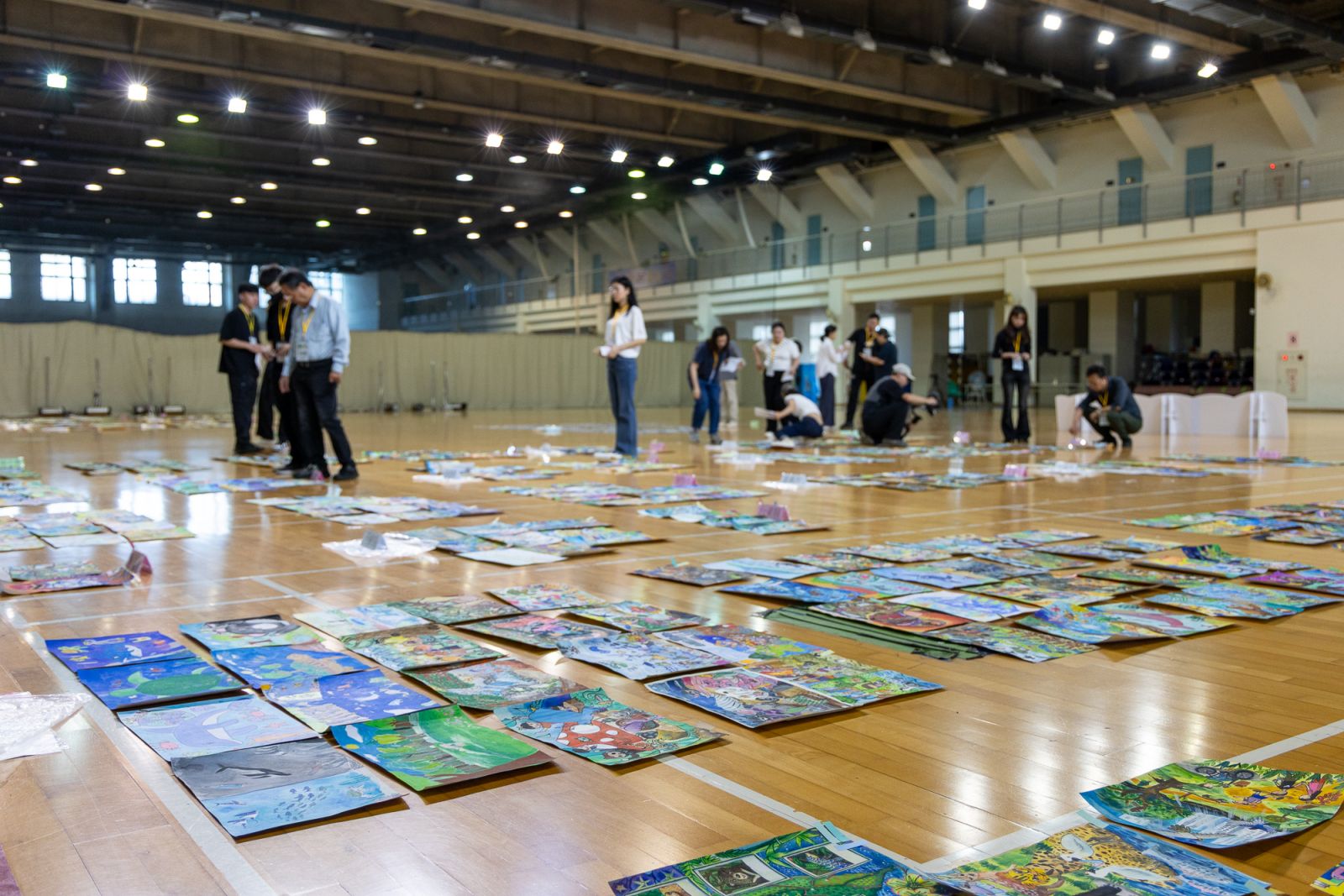
Due to the large number of entries, the artworks were displayed across the gymnasium to facilitate judging. Photo courtesy of the organizer.
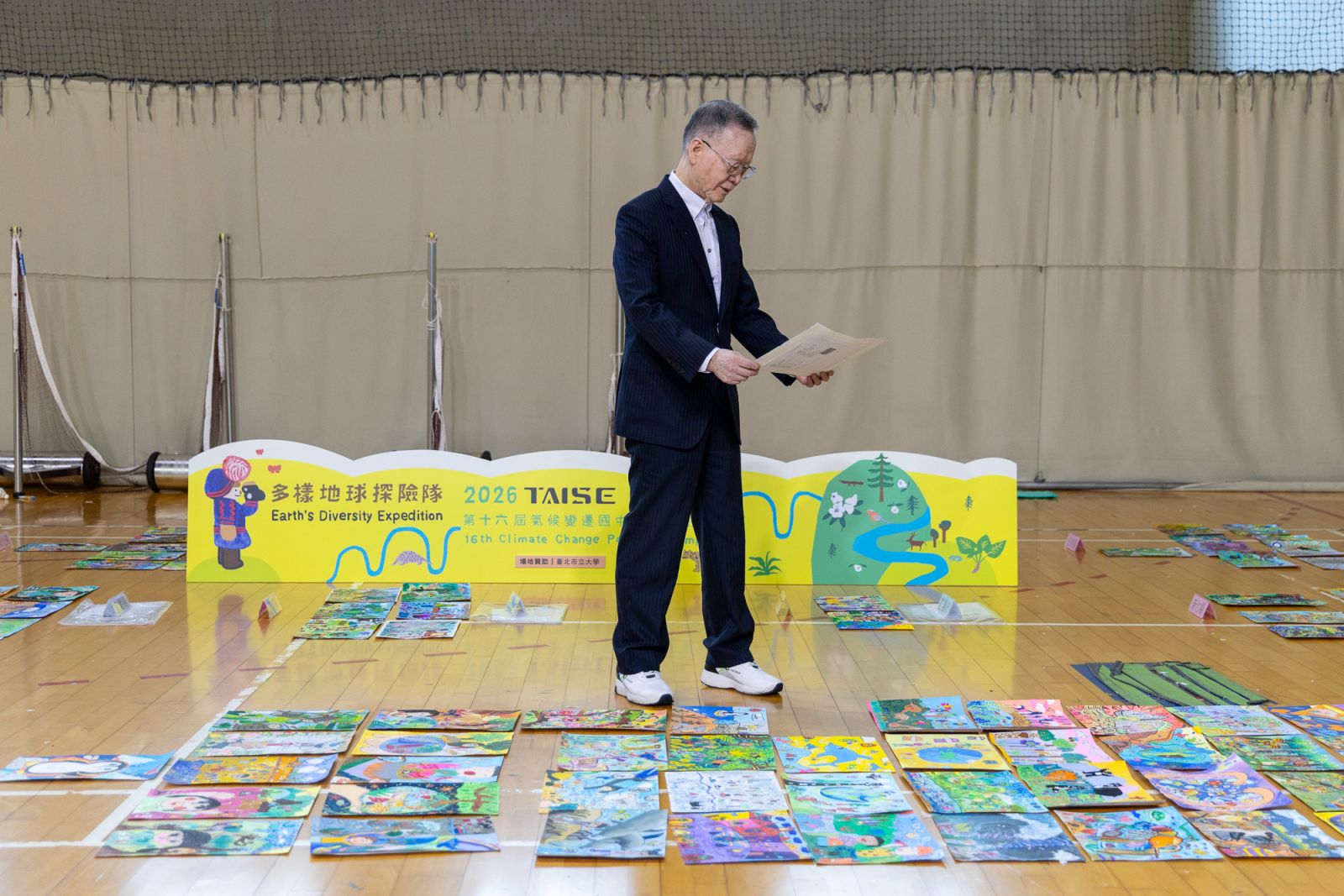
Competition Convener Ambassador Eugene Chien carefully reviews participating artworks. Photo courtesy of the organizer.
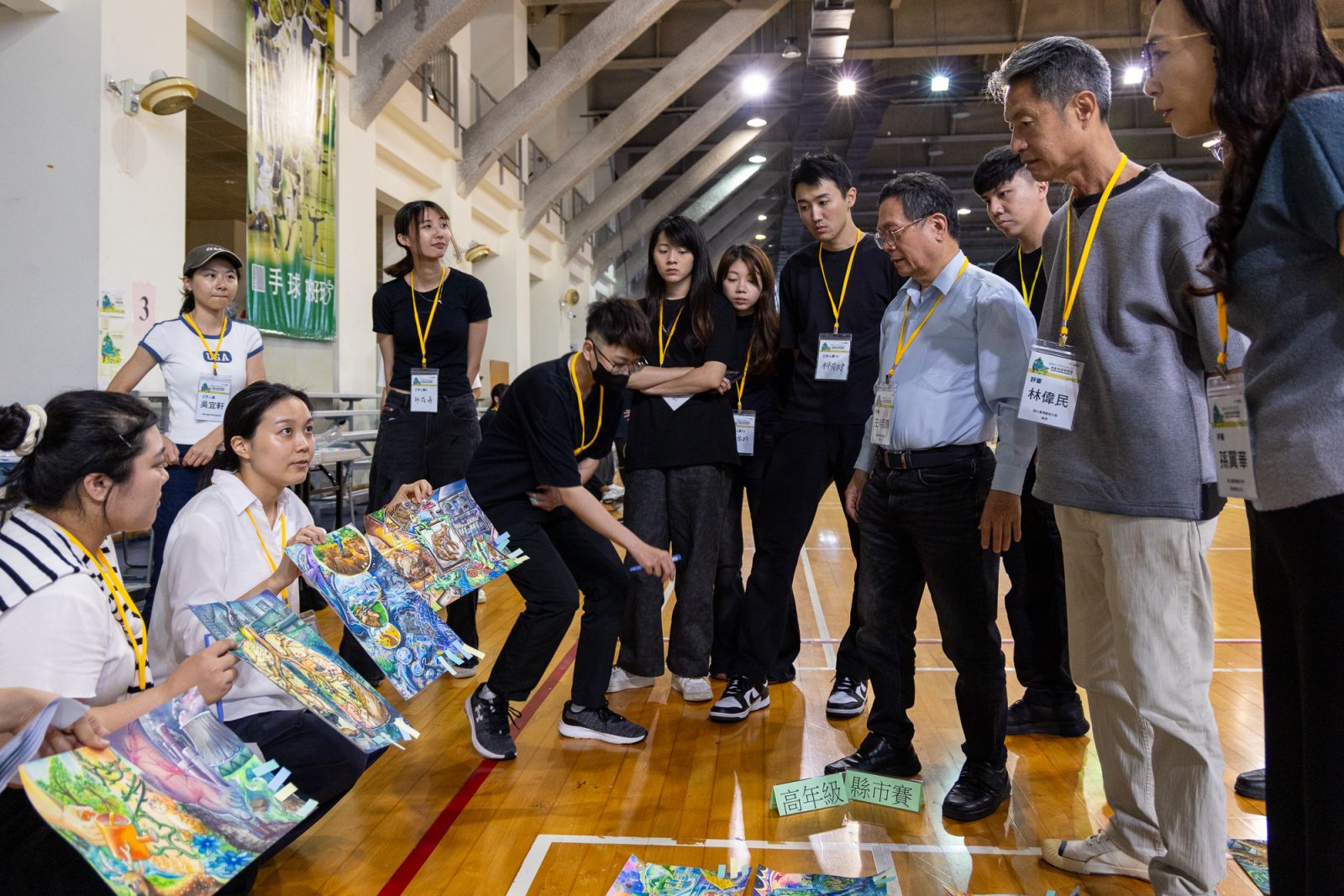
Judges engage in detailed discussion of the submitted works. Photo courtesy of the organizer.